
How to Price Your Home Right the First Time — And Why It Matters More Than You Think
The psychology of list price anchoring, what overpricing actually costs, how to read a CMA, and a practical pricing framework that beats 'list high and see what happens.'
Here’s a truth that most first-time sellers don’t want to hear: the price you put on your listing the day you go live is the single most consequential decision you’ll make in the entire sale process. It determines who sees your home, who shows up to the tour, who writes an offer, how much they write it for, and how long the whole thing takes.
And most sellers get it wrong in exactly the same direction: too high.
I understand why. Your home is worth something to you emotionally, and that number is almost never the same as the number a buyer will pay. Also, every agent and every seller has heard the same piece of conventional wisdom: “List high, you can always come down.” This advice is wrong. Dangerously wrong. Let me explain what actually happens when you overprice, and how to price right the first time.
The Psychology of List Price Anchoring
List price isn’t just a number on a listing. It’s a frame through which every buyer evaluates everything else about your home.
If you list a 2,200 sq ft 3-bedroom at $525,000 in a market where comparable homes are selling at $470,000, here’s what happens in the buyer’s mind:
- The buyer filters listings by their budget. Say their budget tops out at $500,000. Your listing never shows up in their search.
- Buyers with budgets above $525k see your listing alongside homes that are genuinely at that price point — nicer homes, bigger homes, better neighborhoods. Your home looks under-spec’d by comparison.
- The buyers who should be shopping your home (the $450–$490k budget) never see it, and the buyers who do see it compare it unfavorably to their actual shopping range.
This isn’t a theoretical problem. It’s the exact mechanism that kills an overpriced listing. You don’t lose the sale because the price is too high. You lose the sale because the wrong buyers are looking at you.
What Overpricing Actually Costs
Here’s the real cost cascade of listing too high.
Week 1–2: High-end buyers compare you unfavorably to homes at your price point. Mid-range buyers never see you. Traffic is light. You tell yourself it’s early.
Week 3–4: Days on market piles up. Buyers agents start flagging your listing as “stale.” First serious showings happen and feedback is “nice home, seems overpriced.”
Week 5–6: You finally cut the price. A 5% reduction. But now the listing shows “price reduced” in the feed, and buyer psychology flips from “that’s a nice home” to “I wonder what’s wrong with it.”
Week 7–8: Another reduction. By now, your listing’s days on market is 3x the neighborhood average. Sophisticated buyers smell blood and start writing lowball offers, knowing you’re exhausted.
Week 9–12: You finally sell, typically for less than what you’d have gotten had you priced correctly from day one — and it took you 2–3x longer, you lived through weeks of showings, and you probably made concessions you wouldn’t otherwise have made.
Redfin and Zillow both publish versions of this data every year. The pattern is consistent: homes that sell above list price are overwhelmingly homes that were priced correctly or slightly under market. Homes that sell below list price are overwhelmingly homes that were overpriced from day one.
The “list high, you can always come down” advice is an old pre-internet playbook that assumed buyers didn’t have real-time data. Today, every buyer has a phone with Zillow open. They know within 30 seconds whether you’re priced fairly. And your days-on-market is a public metric they can see.
How to Read a CMA
A Comparative Market Analysis (CMA) is the tool used to price a home. You can get one from a listing agent (free, but they’re motivated to price high so you list with them) or you can build one yourself. Here’s how to actually read it.
Step 1: Pull the right comps.
- Sold within the last 90 days (120 at the outside)
- Within 1 mile, ideally in the same neighborhood
- Within 10% of your square footage
- Same bed/bath count
- Similar lot size
- Similar year built (within 10–15 years)
You want 5–8 comps. Not three. Not thirty. The goal is a cluster tight enough to be statistically meaningful.
Step 2: Adjust for differences.
Each comp won’t be identical to your home. You adjust up or down based on real differences. Rules of thumb:
- Finished basement: +$20,000 to $40,000 depending on market
- Updated kitchen (versus dated): +$15,000 to $30,000
- Updated primary bath: +$8,000 to $15,000
- Hardwood floors vs. carpet in living areas: +$5,000 to $10,000
- Pool (in warm markets): +$15,000 to $30,000
- Pool (in cold markets): often $0 or slightly negative
- Extra bedroom: +$20,000 to $40,000
- Fresh paint throughout, move-in ready: +$5,000 to $15,000
- Deferred maintenance visible: −$10,000 to −$30,000
These are directional ranges. Your market will have its own realities.
Step 3: Calculate adjusted sale price per comp.
For each comp, take its sold price and add/subtract adjustments. This gives you what that comp would have sold for if it were identical to your home.
Step 4: Find the tight cluster.
Throw out the one highest and one lowest adjusted prices (they’re usually outliers with unusual circumstances). Average the rest. That’s your fair market value.
Step 5: Price at or within 2% of fair market value.
Your list price should be within $10,000 of your calculated fair market value on a $500,000 home. No higher. Any higher and you lose the algorithmic favor of being in the right search filter and comp set.
When to Go Slightly Under Market
There’s a specific, legitimate use case for pricing below your calculated fair market value: triggering a bidding war.
This works when:
- Inventory is low. Fewer than 2 months of supply in your neighborhood.
- Your home shows beautifully. Because the goal is to generate multiple offers, and offers only stack on homes that feel move-in ready.
- You can hold multiple showings at once. An open house Saturday where ten buyers tour in two hours is the fuel for a bidding war.
- You have time. You need roughly a week between list and offer deadline.
In the right conditions, pricing 2–4% below fair market value can generate 5–10 offers and final sale prices 5–8% above market. The downside is that in slow markets, you just sold below market.
Read your market temperature before you try this play. If your neighborhood’s last five homes all had single offers and took 45+ days, an under-market list price just means you sold for less. If they all had multiple offers within two weeks, the strategy works.
Evaluating Competing Active Listings
Active listings (homes currently for sale) aren’t comps — nobody has actually paid those prices yet. But they matter because they’re your competition.
For each active listing in your neighborhood and price range, ask:
- Is it priced above or below my calculated fair market value?
- How long has it been on the market?
- Has it had price reductions?
Active listings priced aspirationally and sitting for 60+ days tell you the ceiling of what buyers will pay. Active listings that sold fast tell you the floor of real demand. The gap between them is your window.
If two homes similar to yours sold in under 14 days at $478k and $483k, while a third has been sitting 60 days at $515k with two price drops, your pricing window is clearly $475–$490k. Not $510.
A Practical Pricing Framework
Here’s the framework I’d give any seller, boiled down:
- Pull 5–8 real comps. Sold in last 90 days, within 1 mile, within 10% of your square footage.
- Adjust each comp for differences. Use realistic dollar amounts, not wishes.
- Throw out the extremes, average the rest. That’s your fair market value.
- Check active competition. Identify the ceiling (aspirational stale listings) and the floor (fast sellers) in your range.
- Price at or within 2% of fair market value. Not above. Possibly slightly below if conditions support a bidding war.
- Commit for the first 14 days. If you’re not getting showings, the price is the problem.
- Don’t wait 60 days to reduce. If traffic is weak in week 2, reduce in week 3. Stale listings sell for less.
Price right the first time. It’s the single biggest lever you have to protect your final sale price, and almost every seller gets it wrong in the same direction. Don’t be that seller.
Keep Reading

The Complete Show-Ready Checklist: Week Before, Day Before, and Hour Before a Showing
An ultra-practical, timeline-based checklist for getting your home show-ready — from the week before repairs to the hour-before final touches.
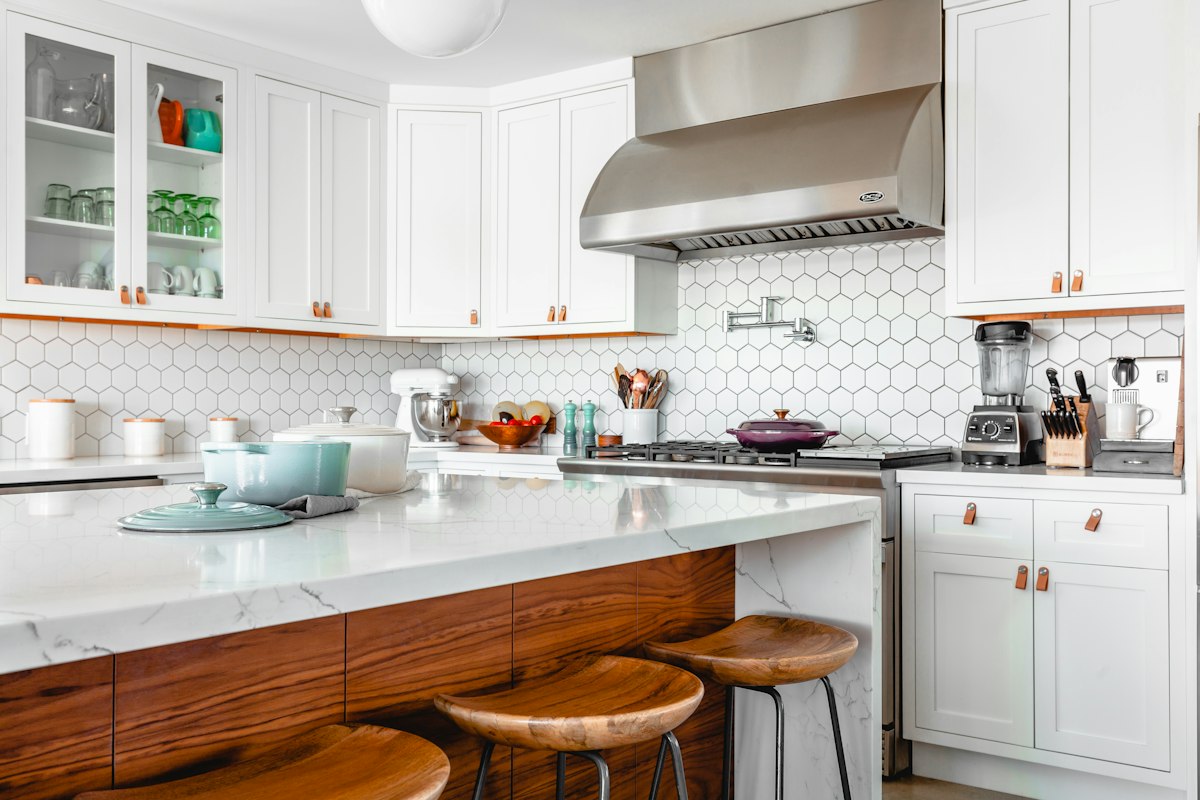
The Renovations That Actually Pay Off (And the Ones That Don't)
Real cost-vs-value data on kitchen remodels, bathroom upgrades, the garage door secret, decks, pools, basement finishing, and flooring — with a clear list of what NOT to do before listing.