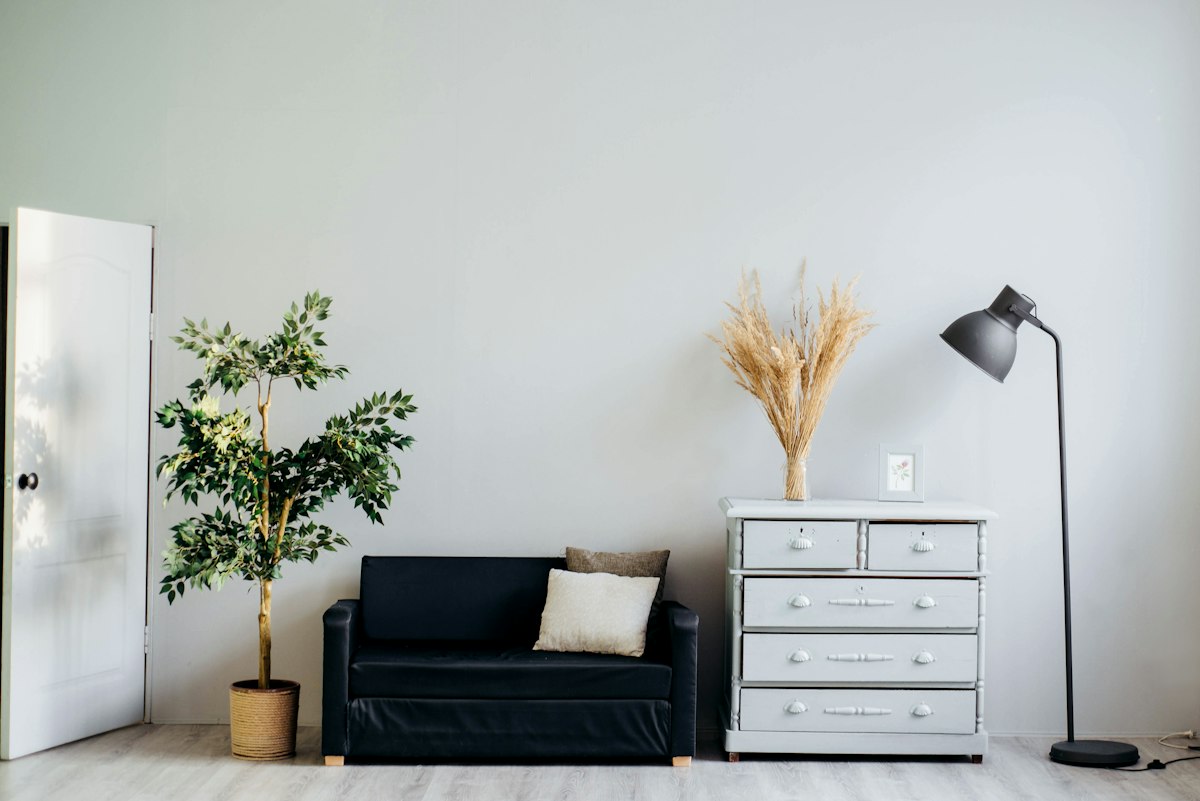
The $500 Weekend That Added $18,000 to Our Asking Price
A first-person guide to the weekend prep projects that returned $18,000 in perceived value — with exact costs and what each one actually moved the needle on.
Two weekends before we listed our last house, we sat at the kitchen table and did the math on what we could actually finish in four days. We had $500 — not $5,000, not $15,000 — $500. My wife was convinced we needed new quartz. I was eyeing the HVAC. A friend who flips houses listened to us argue for ten minutes and then said: “Stop. For $500 you don’t renovate. You refresh.”
That weekend shift — from renovation to refresh — ended up being the most profitable thing we did. We sold for $18,000 over our original asking after three offers in a weekend. Here’s exactly what we did, what each thing cost, and what I’d do differently.
Friday Night: The Big Declutter
The first thing that moves a house’s perceived value isn’t paint or hardware. It’s the absence of stuff. We spent Friday night pulling 30% of our visible belongings into garbage bags, donation boxes, and a single storage unit we rented for $60 a month.
- Bookshelves: went from stuffed to styled — maybe a dozen books per shelf, a framed photo, a plant.
- Kitchen counters: cleared except for one cutting board and a bowl of lemons.
- Closets: half-emptied. Buyers open closets. Every time.
- Bathrooms: all personal products under the sink. Just fresh towels and hand soap out.
The decluttering itself cost us $60 (the storage unit for a single month) plus Saturday-morning donation drop-off. It was the single highest-leverage thing we did all weekend. Stagers charge $1,500–$3,000 for this exact work.
What I learned: The hardest part isn’t deciding what to remove. It’s being willing to live slightly uncomfortably for six weeks. Do it anyway.
Saturday Morning: Paint Where It Matters
We didn’t repaint the whole house. We repainted the three rooms that buyers would anchor on: the living room (it was a muddy beige), the primary bedroom (one accent wall was a color choice I have never recovered from), and the kitchen (ceiling and trim only — the cabinets were fine).
Total paint + supplies: $180. One gallon of Behr Marquee in Swiss Coffee and one in Agreeable Gray. Two angled brushes, two mini-roller sets, and painter’s tape.
Paint is the single highest ROI prep project on a per-dollar basis. Realtors estimate $400–$1,200 in paint spend returns $2,500–$8,000 in perceived value. For us, it was probably more like $6,000. A fresh coat doesn’t just look cleaner — it signals “this house has been cared for,” which changes how buyers interpret everything else they see.
Choose neutrals. Swiss Coffee, Agreeable Gray, Alabaster, Revere Pewter. Not white-white. Not “our personality.” Neutrals let buyers project themselves onto the space, which is literally the entire point.
Saturday Afternoon: Hardware and Fixtures
Here’s where $500 starts to look like magic. We swapped:
- Kitchen cabinet knobs and pulls: 28 pieces, $82 total (brushed brass from Amazon). The dated brushed nickel was aging the whole room by 15 years.
- Kitchen faucet: $89 on sale. The old one was a builder-grade pull-down with a calcified head.
- Every bathroom faucet: two vanities at $45 each — $90.
- Ten interior door handles: matte black, pack of ten for $35.
- Bathroom vanity lights: two fixtures at $40 each from Home Depot.
Total hardware and fixture spend: $376. Labor: me, a YouTube tutorial, and a beer.
When a buyer walks into a kitchen, they’re cataloguing a dozen small signals in about eight seconds. Hardware is in the first three. If your knobs look 2008 and your faucet has a mineral crust, the entire kitchen reads “old” even if everything else is fine. Swap $400 worth of hardware and the same kitchen reads “updated.”
Sunday Morning: Curb Appeal on a Shoestring
The front of the house is the first thing buyers see when they pull up, and the second thing they see is the online photo. Both need to land.
- Fresh mulch: 8 bags of black mulch at $4.50 each — $36.
- Trimmed hedges, mowed lawn: free, I already owned the tools.
- Front door paint: one quart of Benjamin Moore Newburyport Blue — $22.
- New house numbers: matte black metal, 4 inches tall — $18.
- Two planters by the front door: thrift store terra cotta ($8) + a trip to the garden center for two boxwoods ($22).
Total curb appeal spend: $106. Time: about three hours.
The front door paint alone was the single highest “wow factor” dollar of the whole weekend. A front door photograph is often the listing thumbnail. A crisp navy door against a fresh mulch bed and trimmed hedges reads premium in a way that a faded original door simply cannot.
Sunday Afternoon: The Deep Clean
We spent Sunday afternoon doing what we now call a “photo-ready clean.” This is different from a normal clean. It’s the clean where you take a toothbrush to the caulking, wipe down baseboards, and clear the cobwebs in the corners of every ceiling.
If we’d hired this out, it would have been $250. We did it ourselves in four hours with a Magic Eraser, Windex, Pine-Sol, and a shop vac. The house smelled faintly of lemon and felt ten years newer.
The Numbers
| Item | Cost |
|---|---|
| Storage unit (one month) | $60 |
| Paint and supplies | $180 |
| Hardware and fixtures | $376 |
| Curb appeal (mulch, door, numbers, planters) | $106 |
| Total | $722 |
Okay — I admit, we went over. The headline is “$500.” The reality is $722. I don’t think the extra $222 hurt us.
We listed at $485,000. We’d been planning to list at $467,000. The bump was based almost entirely on how the final photos looked versus the original listing photos from when we bought the house four years earlier. Our agent literally said, “This doesn’t look like the same house.”
We got three offers the first weekend. We accepted at $503,000. Netting out the $722 we spent, that’s a roughly $17,800 lift against what we would have asked for had we listed the house in the condition we’d been living in.
What I’d Do Differently
Two things, both small:
- I’d buy the mulch and paint on Thursday, not Friday night. We ran out of time to let the front door dry properly and had to touch it up Monday. Build a 24-hour buffer for anything exterior.
- I’d hire a stager for a one-hour consultation before I started. A $150 walk-through would have told me the living room rug was fine and saved me 40 minutes of second-guessing it.
That’s it. The whole playbook in about 16 hours of actual work over four days. Start with the declutter. Paint the three rooms buyers anchor on. Swap the hardware that ages the house. Dress the front door. Clean like a photographer is coming — because one is.
Don’t renovate. Refresh.
Keep Reading
The Complete Show-Ready Checklist: Week Before, Day Before, and Hour Before a Showing
An ultra-practical, timeline-based checklist for getting your home show-ready — from the week before repairs to the hour-before final touches.
The Best (and Worst) Months to List Your Home, State by State
A data-informed guide to seasonal home-selling patterns, rate dynamics, and the regional wrinkles most generic 'best time to sell' articles get wrong.